Calling Ourselves: The Quiet Integrity of Pickleball


There’s something unique about pickleball that sets it apart from many other sports. Most of the time, we don’t have referees. We don’t have line judges. What we have instead is something far more powerful—and far more fragile: trust.
Pickleball is a self-officiated game.
And that means the quality of the game depends not just on skill, but on integrity.
The Unwritten Agreement
Every time we step onto the court, there’s an unspoken agreement between players:
I will be honest on my side of the net, even when it costs me a point.
That’s easy when the ball is clearly out.
It’s harder when it’s close.
And it’s hardest when the game is tight and the outcome matters.
But those are the exact moments that define the kind of player we are.
The Subtle Drift
Lately, many players have noticed a quiet shift. Close balls are being called “out” a little more quickly. Foot faults go unmentioned. Kitchen violations get overlooked—especially when they benefit the person making the call.
It’s rarely blatant cheating. More often, it’s subtle:
• “I think it was out.”
• “I didn’t see my foot in the kitchen.”
• “That felt like it clipped the line.”
And maybe, in the moment, it even feels true.
But when those calls consistently lean in one direction—our direction—the game begins to lose something important.
More Than Just a Point
When someone makes a questionable call in their own favor, they might win the rally.
But they lose a little credibility.
And the other players feel it.
You can sense it in the tone of the game:
• Conversations get quieter
• Energy shifts
• Joy fades just a bit
Because pickleball, at its best, is not just about competition—it’s about community.
The Gold Standard
The best players—the ones people genuinely enjoy playing with—aren’t always the most skilled.
They’re the ones who:
• Call balls in when they’re unsure
• Admit when they touched the net
• Offer a replay when there’s doubt
• Care more about fairness than winning
They play with a quiet confidence that says:
“I’d rather lose the point than lose my integrity.”
A Better Way Forward
What would happen if we all made a small shift?
Before making a call, we ask ourselves:
“Would I make this same call if it went against me?”
Or even:
“Am I being as fair to them as I am to myself?”
That one moment of reflection can change everything.
Setting the Tone
You don’t need to correct everyone or confront every bad call.
Often, the most powerful influence is example.
When you consistently:
• Call yourself on faults
• Give the benefit of the doubt
• Show generosity in close situations
Others notice.
And slowly, the culture shifts back toward trust.
⸻
In the end, pickleball isn’t just a game of paddles and points.
It’s a game of character.
And the players who make it the most enjoyable aren’t the ones who win the most—
They’re the ones you trust the most.
Follow Us




Recent Articles


-
The Timeless Appeal of a Cherry Two-Drawer Hall Table
Aug 18, 26 05:39 PM
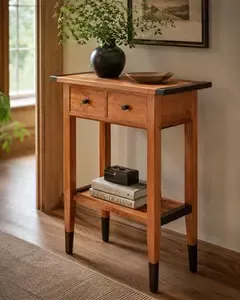 Some pieces of furniture are designed to do more than fill a space—they bring warmth, character, and a sense of permanence to a home. Our Two-Drawer Cherry
 -
A Graceful Welcome: The Cherry Demilune
Aug 17, 26 06:54 PM
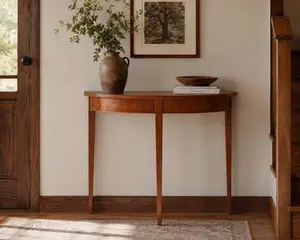 There is something welcoming about a piece of furniture that seems to have always belonged in a room. The Cherry Demilune begins with solid cherry, carefully
 -
A Place for the Things We Keep
Aug 15, 26 06:57 PM
 A bookcase begins as a place to hold books. But over time, it becomes something more. A favorite novel finds its place beside a photograph from years

EXHIBITOR